
E-Commerce Shipping
Best WooCommerce Shipping Solution Comparison: Shippo vs ShipStation vs EasyPost

Quick verdict
Three solid shipping-rate APIs, three different sweet spots. ShipStation fits high-volume stores already paying for a plan with API access. Shippo is the cheapest way for a new store to show real carrier rates at checkout. EasyPost is built for developers and multi-origin marketplaces.
We build the WooCommerce plugin for each one – pick yours:
If you are comparing WooCommerce shipping plugins, ShipStation, Shippo and EasyPost are the three names that come up again and again. They are the main competitors in the multi-carrier space, and for good reason: each one connects you to discounted rates from USPS, UPS, FedEx and DHL through a single API. But they are not interchangeable, and picking the wrong one for your store is an expensive mistake.
This comparison breaks down where each one wins, where it falls short, and which type of WooCommerce store it suits best. We build shipping plugins for all three, so we have no reason to push you toward one over the others. We just want you on the right API for your volume, budget and carriers.
One thing worth knowing up front: ShipStation changed its API policy in May 2025 and now limits API access to certain plans. If you are on a lower ShipStation tier, that change is probably why you are reading this. Shippo and EasyPost both still offer API access on lower plans, which is why so many store owners now treat them as the natural ShipStation competitors.
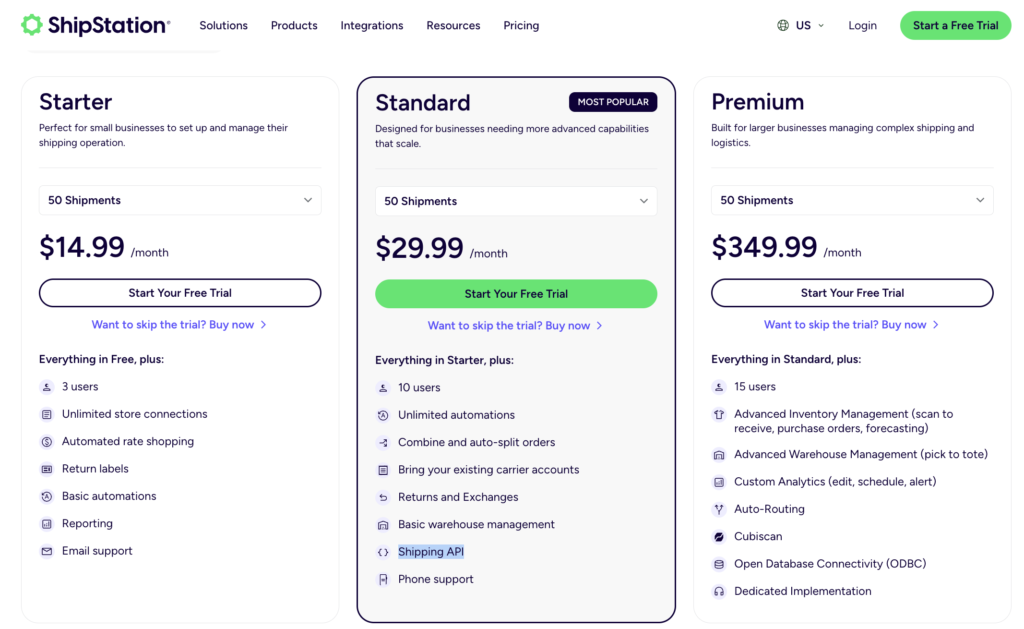
ShipStation: built for high-volume stores
ShipStation is the established player. It has been around the longest, and if you already sell across Amazon, eBay, Shopify and WooCommerce from one dashboard, its automation rules, batch label printing, pick lists, packing slips and branded tracking pages are hard to beat. It connects to over 50 selling channels plus accounting tools like QuickBooks and Xero, the carrier list is broad – USPS, UPS, FedEx, DHL and more; and the multi-channel order management is genuinely mature.
The catch, and the reason you may be comparing it right now, is access. Since May 2025, ShipStation has limited its API to higher plans. Live rates at your WooCommerce checkout only work through that API, so a lower-tier ShipStation plan will not quote rates to your buyers. If you are already on a qualifying plan, ShipStation is the most feature-complete option here; if you are not, that gate is the whole story.
Key advantages:
- Advanced features like batch label printing, branded tracking, and automation rules
- Supports major carriers including USPS, UPS, FedEx, DHL, and more
- It’s suitable for stores that handle a large number of shipments, especially the higher-tier plans that include API access.
- Centralized dashboard for managing orders from multiple sales channels
Best for: established, multi-channel stores already paying for a ShipStation plan that includes API access. New to it? See our ShipStation setup guide.
Shippo: flexible and easy to use
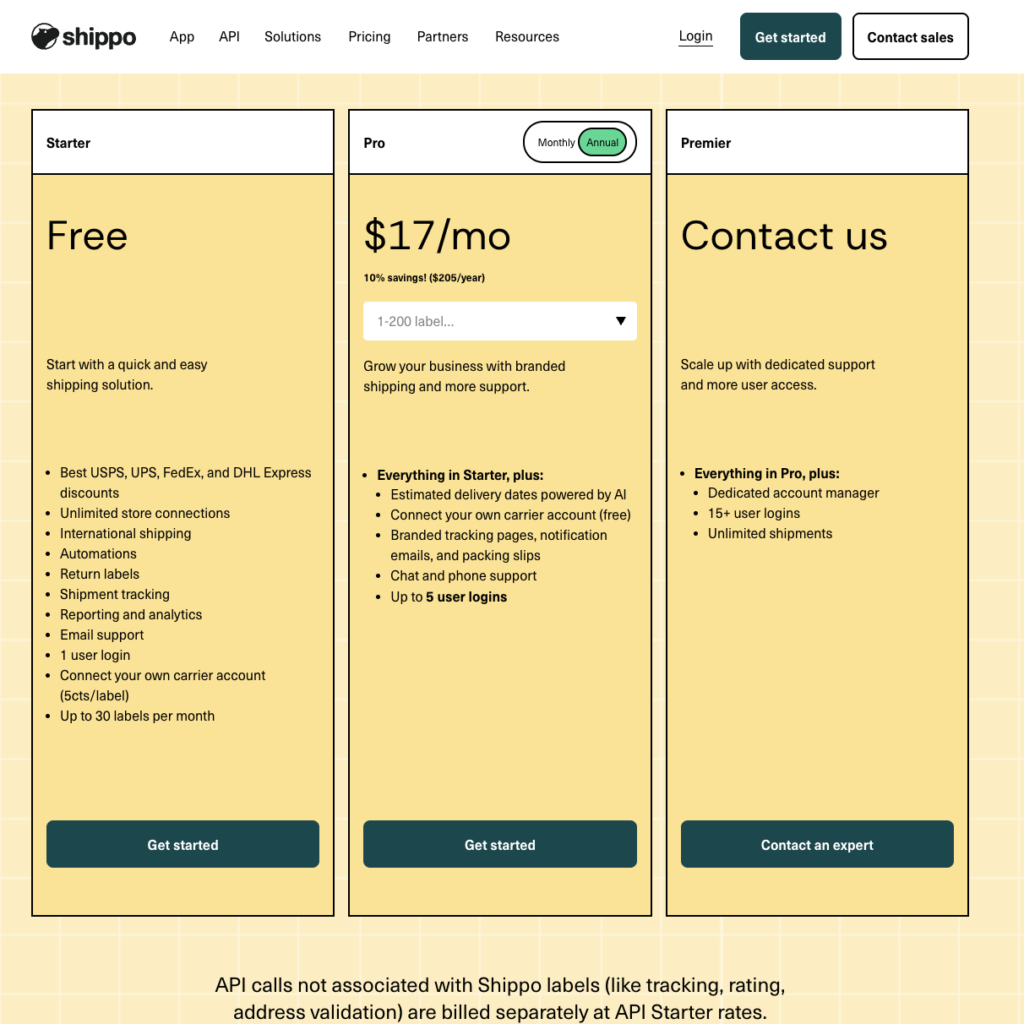
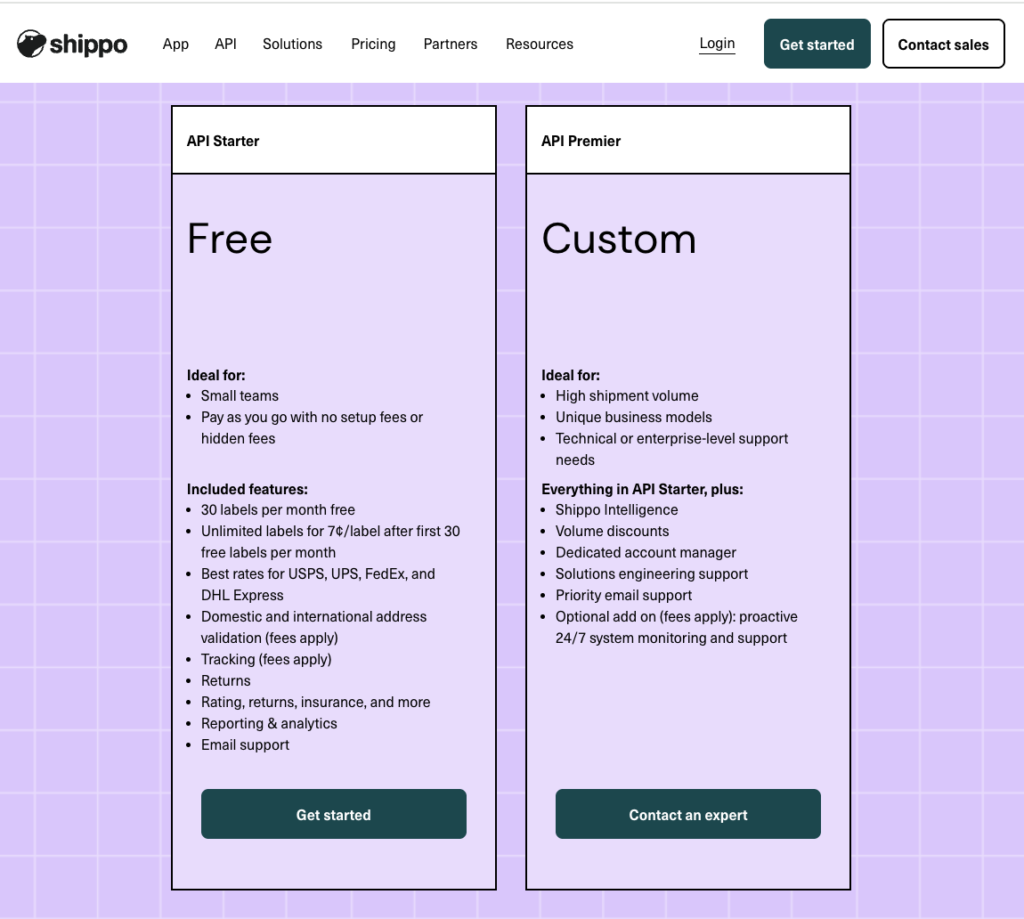
Shippo is the budget-friendly competitor, and it is the one we most often recommend to stores that are just starting out. API access is available on every plan, including the free one, so you can show real carrier rates at checkout without a monthly subscription. Setup is fast, pricing is transparent and listed on their site, and the carrier coverage includes USPS, UPS, DHL, and FedEx. For most stores, it offers coverage comparable to ShipStation. Shippo also lets you compare shipping rates across carriers side by side, schedule pick-ups, and send buyers real-time tracking updates.
What you trade away is depth. Shippo’s automation is simpler than ShipStation’s, and there is less multi-channel order management. For a new or small WooCommerce store that wants accurate live rates without a high fixed cost, that is usually the right tradeoff.
Key advantages:
- User-friendly interface design and fast API response times
- API access on the free plan and every paid plan
- Affordable starter plans, making it accessible for small business owners
- Transparent pricing on their website
Best for: new and small stores, and anyone who wants live rates without committing to a premium plan. New to it? See our Shippo setup guide.
EasyPost: simple and affordable for small businesses
EasyPost takes a different angle. It is built for developers and multi-origin setups, and its free tier, up to 3,000 USPS labels a month, is the most generous in this comparison. EasyPost API access is available to all users, though volume-based limits and fees apply once you scale. Carrier coverage is narrower than Shippo or ShipStation, but the majors (USPS, UPS, FedEx) are all there.
Key advantages:
- User-friendly interface, supports major carriers
- API access for all users
- Free up to 3,000 labels per month
- Additional service fees may apply, and the billing structure varies with usage.
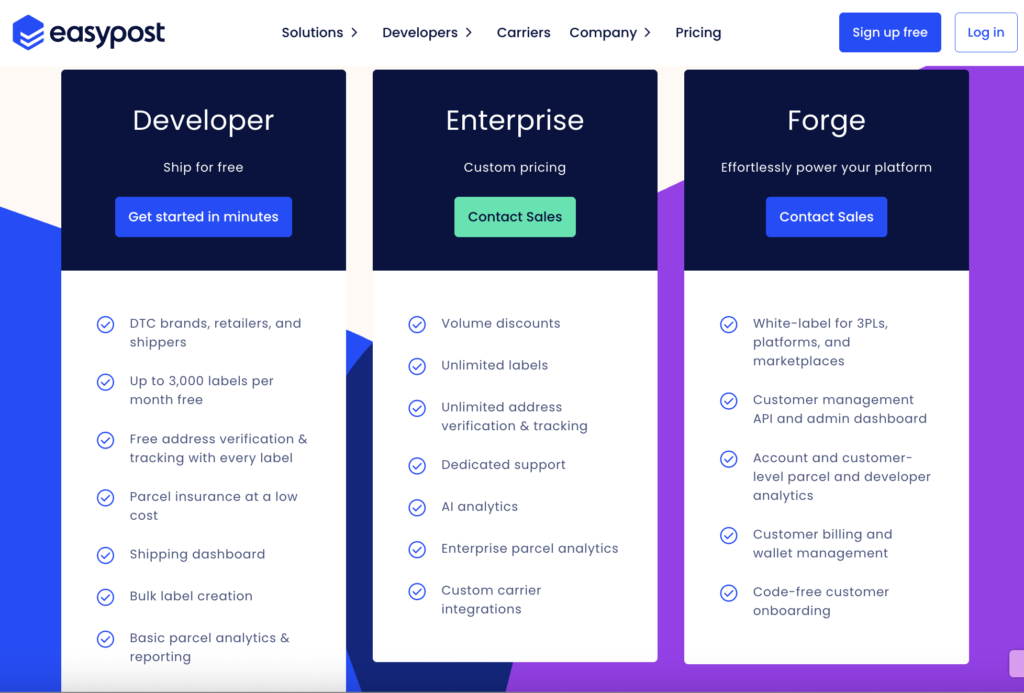
The main downside is transparency: the full billing breakdown means contacting their sales team. If you mostly ship USPS and want predictable costs, the EasyPost vs Shippo and EasyPost vs ShipStation comparisons both favour EasyPost at low volume.
Best for: developers, USPS-heavy shippers, and multi-origin or marketplace stores.
ShipEngine vs ShipStation: Are they the same thing?
This question comes up a lot, and the short answer is: almost. ShipEngine is the developer-facing API from Auctane, the same company behind ShipStation. In 2025, Auctane started consolidating ShipEngine into the ShipStation API, so the two names now point at the same underlying service – same carriers, same rates, same API V1 and V2 endpoints.
The practical difference for a WooCommerce store is which side of the product you want. If you already pay for the ShipStation dashboard and its automation rules, our ShipStation PRO plugin reads rates from that account. If you just want the raw carrier API without the ShipStation subscription, our ShipEngine PRO plugin talks to the API directly. Either way, live rates land at your WooCommerce checkout.
What are the key differences between ShipStation, Shippo and EasyPost?
So how do ShipStation, Shippo and EasyPost actually compare? All three offer multi-carrier shipping with discounted rates, but they differ on carrier support, pricing, ease of use, and API access – and the Shippo vs ShipStation gap has widened since ShipStation’s 2025 API policy change. Here is the side-by-side ShipStation vs Shippo vs EasyPost breakdown.
| ShipStation | Shippo | EasyPost | |
|---|---|---|---|
| API Access | Limited to higher plans as of May, 2025 | Available to all plans | API access for all users (with volume-based limits and fees) |
| Free Plan | No free plan | Offers a free plan | Yes. Up to 3,000 USPS labels/month free |
| Ease of Integration | Feature-rich with advanced customization options | Simple setup and fast WooCommerce integration | Easy to use, but some technical setup may be needed |
| Pricing Transparency | Transparent for all plans | Transparent. Pricing listed on the site | Less transparent – requires contacting sales |
Before switching to a new platform, we recommend reaching out to Shippo and EasyPost directly to better understand their billing systems, service fees, and API limits. Each platform offers different advantages depending on your specific business needs.
Looking for ShipStation alternatives specifically? This page compares the three APIs head to head. If you instead want a ranked list of the best ShipStation alternatives for 2026 – including options beyond these three – see our best ShipStation alternatives guide.
Frequently asked questions
ShipStation updated its API policy, limiting access to API v1 to higher-volume plan users. If you’re on a lower plan like Starter plan, your API may have expired, which stops live shipping rates from displaying in your WooCommerce cart. Switch to ShipStation’s API v2 and update to the latest version of the ShipStation Shipping PRO plugin. From May 19, 2025, both API v1 and v2 are only available to higher plans. See our guides on updating your API key to v2 and updating the plugin properly.
You can consider Shippo or EasyPost. Both offer live rates for major carriers through their APIs and integrate well with WooCommerce through our shipping plugins, with API access available on lower plans than ShipStation requires.
ShipStation suits high-volume stores that need its advanced automation and carrier options. Shippo is a strong choice for small to mid-sized businesses wanting an affordable, easy-to-use solution with broad carrier support. EasyPost is good for budget-conscious stores, especially if you mostly ship with USPS, thanks to its generous free-labels allowance.
Yes. We offer free versions of Shippo Shipping PRO and EasyPost Shipping PRO so you can confirm they display live rates on your real store before upgrading. The free versions let you verify carrier support, confirm rates appear in the cart, and get a feel for the plugin.
Absolutely. If you decide to switch to Shippo Shipping PRO or EasyPost Shipping PRO, contact our 1TeamSoftware support team. We assist with the transition and ensure minimal disruption to your WooCommerce store’s operations.
Almost. ShipEngine is the developer-facing API from Auctane, the company behind ShipStation, and Auctane is consolidating ShipEngine into the ShipStation API. The two names now point at the same underlying service – same carriers, rates and endpoints. The difference is whether you want the ShipStation dashboard subscription or just the raw carrier API.
Get started
Pick the API that fits your store, and start with the free version to confirm live rates on your real checkout:
- ShipStation Shipping PRO
- Shippo Shipping PRO
- EasyPost Shipping PRO
- Want options beyond these three? See our best ShipStation alternatives for 2026.
- Prefer code or AI? See our WP-CLI and AI agent setup guide.